Arts Collaborative Conversation: Awkwardness Friday, October 16 at 1:15 PM Lamar Dodd building room S360
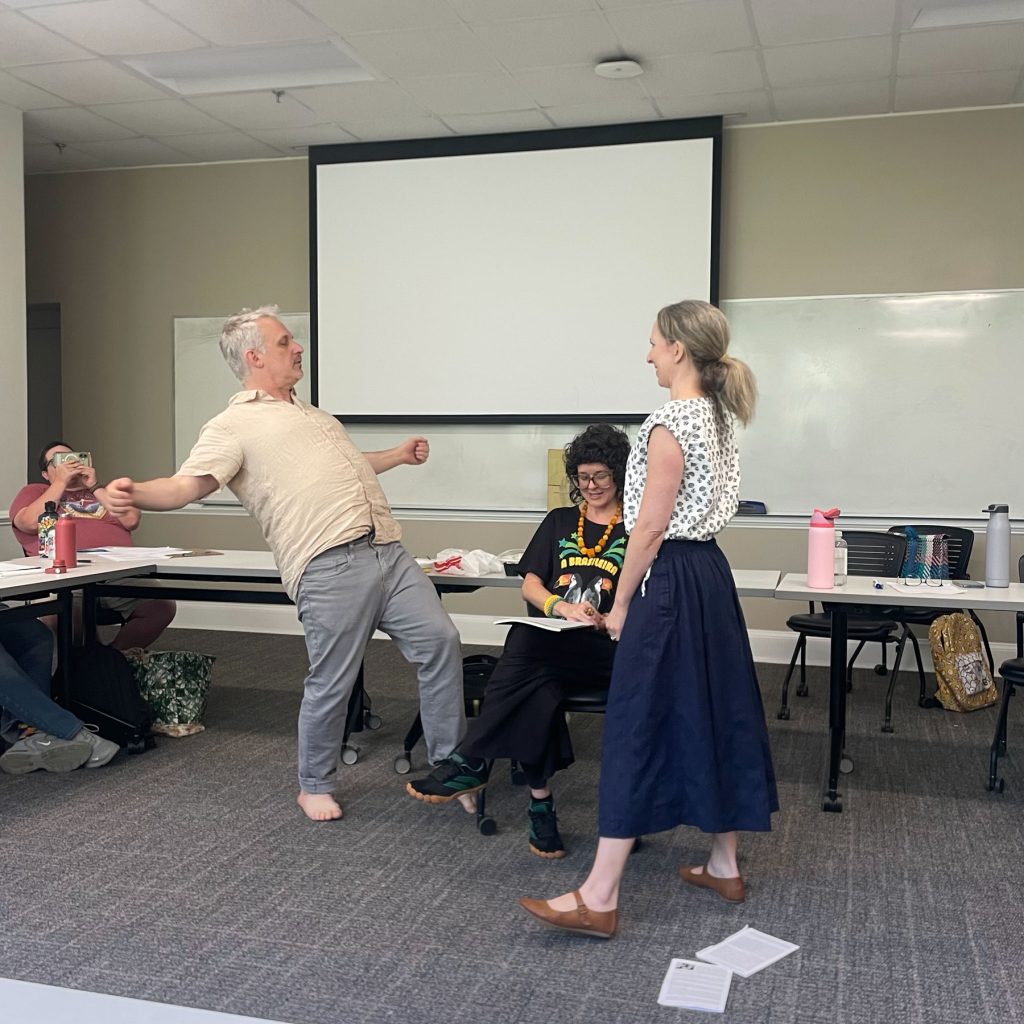
How might one do philosophy with dance?
A performance and conversation that explores a philosophical question — the nature of awkwardness, especially the aesthetic and artistic dimensions of awkwardness — through a collaborative and creative research process involving a dialogue between philosophy and dance. Art, Philosophy, and Awkwardness is a project supported in part by an Arts Collaborative mini grant.
Hosted by the Arts Collaborative student organization.
Project participants:
Aaron Meskin, Philosophy Rebecca Gose, Dance Candy Beers, Human Development and Family Science Maryn Whitmore, Athens community
As a member institution of the Alliance for the Arts in Research Universities (a2ru), UGA may nominate up to four student representatives. Please contact mark.callahan@uga.edu by October 29 for more information about how to participate.
a2ru is delighted to announce that this year’s Emerging Creatives Student Summit will be hosted by the University of Maryland on its College Park campus March 18-21, 2027. This year’s theme is “Power.”
Power comes from a solar panel or burning fuel, an idea or a group of people in motion. A work of art is powerful; so is a dictator. Power lends the capacity to control events and even people; power feeds, inspires, motivates and detonates. Where does power come from? What can we do with it? What should we do with it? (What would Spider-Man’s Uncle Ben say?)
Emerging Creatives is a three-day collaborative experience in which students form small cross-disciplinary teams to explore a specific area of the Summit’s theme. Over the course of the event, teams make something that represents their exploration: a syllabus, cookbook, podcast, app, opera, pair of shoes, urban blueprint, pop-up store, musical score, website…the list of possible outcomes is endless.
At Emerging Creatives, students not only envision and create their project; they also participate in hands-on experiences related to the Summit theme, meet extraordinary interdisciplinary thinkers, practice presenting their work, and exchange ideas about their project with peers and experts. Students also build collaboration skills in micro-workshops with a2ru staff.
As an a2ru member institution, UGA students, faculty, and staff are eligible for free registration.
This webinar will be a panel discussion with the researchers behind “The ‘Evolving’ Crisis: The Precarious State of the Arts in Higher Education”, published in the May 2026 issue of the American Journal of Arts Management (AJAM). The panel will discuss the findings of the multi-institutional research coordinated by the organization Arts Administrators in Higher Education (AAHE), which included responses collected in 2025 from more than 50 colleges and universities across the United States.
This paper argues that the contemporary state of the arts in U.S. higher education is characterized by two structural dynamics that help explain the persistent vulnerability of non-revenue-generating programs: the Advocacy-Resource Trap, a self-reinforcing cycle in which understaffed units cannot generate the impact evidence needed to secure resources; and the Decentralization Paradox, wherein programming distributed across multiple units produces fragmentation rather than integration.
As an a2ru member institution, UGA students, faculty, and staff are eligible for free registration.
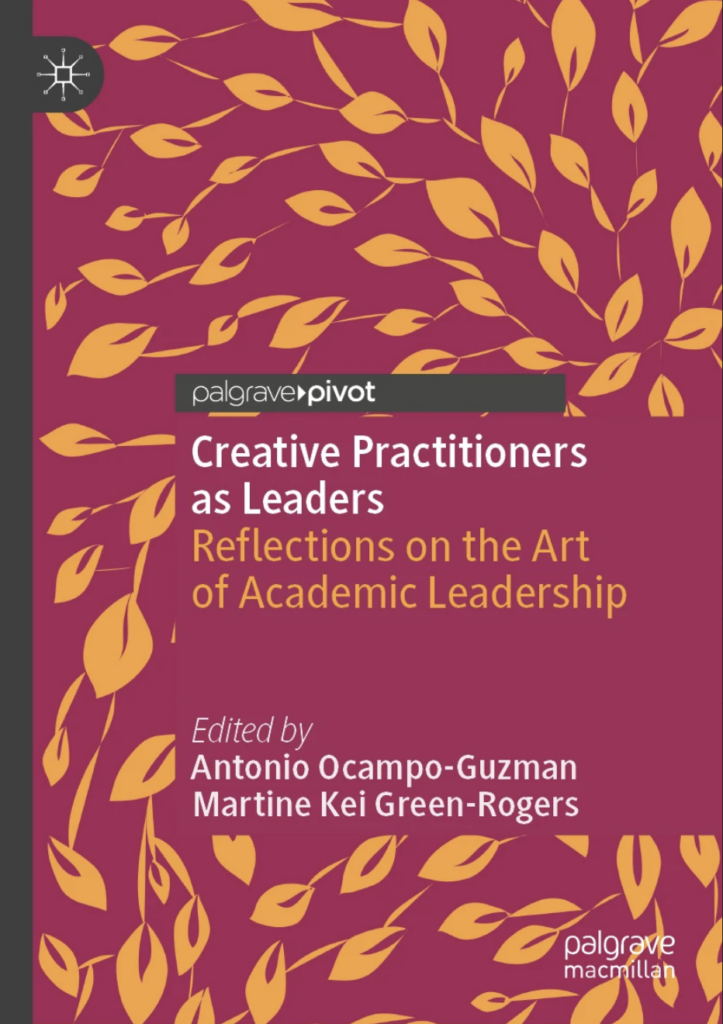
The co-editors and several authors from the anthology Creative Practitioners as Leaders: Reflections on the Art of Academic Leadership will discuss how they use the tools and skills of their embodied artistic practice within their academic leadership roles. This new edited collection of essays and interviews is a tool for theatre practitioners who are interested in academic leadership roles as well as a resource for those from other disciplines who may want to think about acquiring and implementing skills from the performing arts in their leadership.
This webinar is presented in partnership with a2ru and the International Council of Fine Arts Deans (ICFAD).
Arts Collaborative Mini Grants Call for Proposals No deadline
Arts Collaborative Mini Grants support new creative interdisciplinary projects and modes of collaboration. Teams must include participants from multiple academic departments and include a UGA student or faculty member to serve as a primary contact. Grant recipients are provided with a project mentor and up to $1000 in support for qualified expenses. Proposals will be reviewed on a rolling basis, pending the availability of funds.
– Brief description of project, goals, and challenges – Names and roles of collaborators
Special consideration will be given to proposals that engage the following themes:
– Circular UGA initiative – Artificial Intelligence – Arts and health – Arts and environment
The Mini Grant Program is supported by the UGA Arts Collaborative, an interdisciplinary initiative for advanced research in the arts. The Arts Collaborative is supported in part by the Willson Center for Humanities and Arts, Franklin College of Arts and Sciences, and the Graduate School.